Water Pressure &
Pipe Repairs Sydney

If your taps are weaker than they used to be, or a pipe has already let go somewhere in the house, the fix depends on finding the actual cause first. We don't just swap parts and hope. We test, trace the fault, then repair.
licensed & insured
Free quotes, no hidden costs
Licence 479715C

What Causes Low Water Pressure in Sydney Homes

Low water pressure Sydney homeowners report usually comes down to one of a handful of causes, and they’re not all fixed the same way.

Older Sydney homes, particularly anything built before the 1980s, often still have galvanised steel pipes. These corrode from the inside over decades. The pipe doesn’t need to leak for this to matter: as rust and mineral scale build up on the inner wall, the internal diameter shrinks, and less water gets through. The pipe looks fine from the outside. It’s just narrower than it used to be.

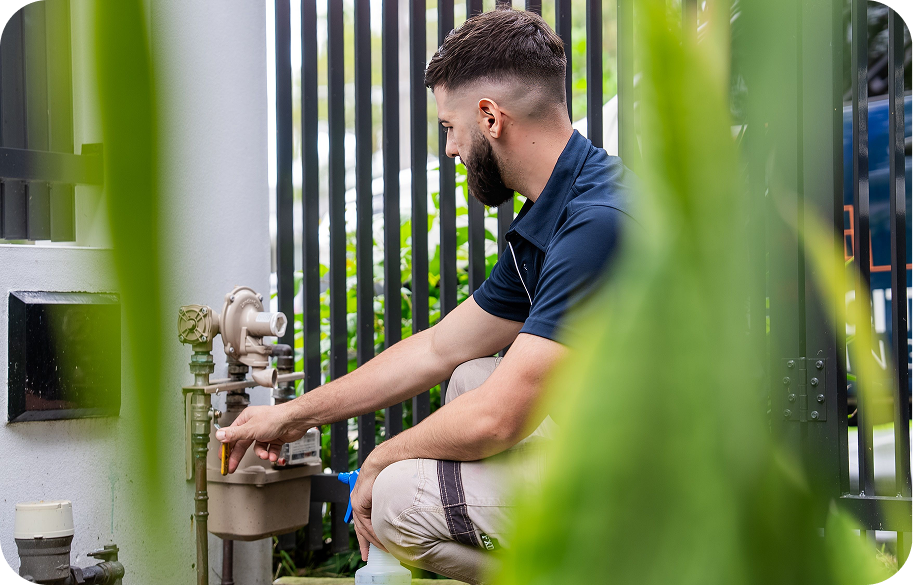
Other common causes include a pressure limiting valve at the water meter that’s faulty or set too low, a hidden leak elsewhere in the system quietly bleeding pressure away before it reaches your taps, or something as simple as a blocked aerator or showerhead. We test pressure at the meter first. That tells us whether the problem starts at the street connection or somewhere inside your own plumbing, which changes how we approach the fix.

Water Pressure Problems We See Most in Sydney Homes

Four patterns we see again and again. The fix for one won’t touch the others, so we work out which one you’ve got first.

Pressure drops when two taps run at once

Usually points to undersized or partially blocked pipework rather than a supply issue.

Hot water weaker than cold

Often traces back to the hot water system or its feed pipe rather than the mains.

Weak pressure in one part of the house only

Fine at the kitchen tap but weak at a rear extension or upstairs bathroom, usually an old, narrow pipe run feeding just that area.

Low pressure everywhere, all the time

Points back to the meter and the street connection.

Pipe Repair Sydney: Finding the Fault Before We Touch Anything

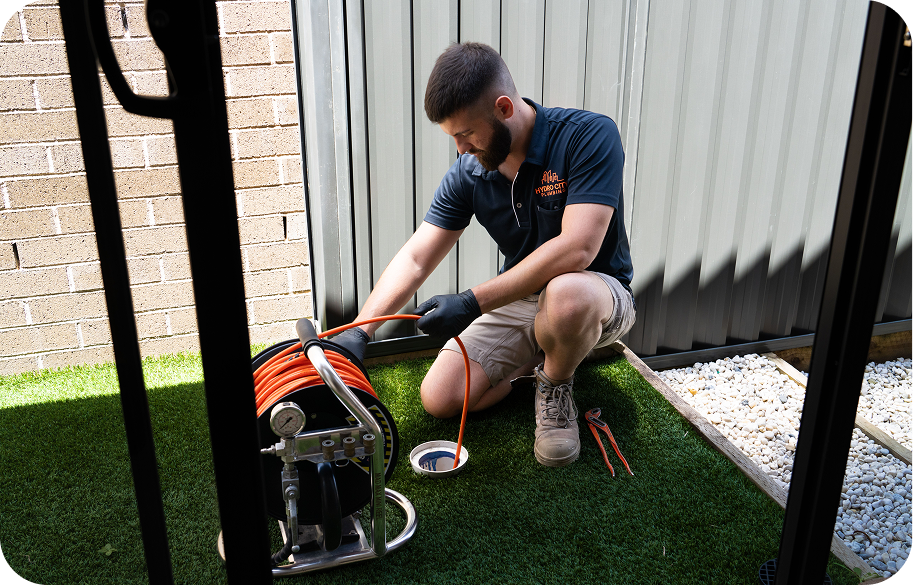
For pipe repair Sydney homes need, the first job is always locating the exact damage. We use the same diagnostic methods as our Leak Detection work: thermal imaging, acoustic sensors, and pressure testing, to pinpoint where a pipe has failed without digging up the whole yard on a guess.

Once we know exactly where the problem is, we choose between a patch repair on the damaged section or replacing a longer run if the surrounding pipe is corroded enough that a patch won’t hold for long. For older galvanised pipe that’s already failed once, replacing the run with copper or modern poly pipe is usually the more sensible long-term fix. Patching a single leak on old steel pipe often just means the next failure is a few months away, a few feet further along.

We dig only where the pipe actually needs to come up, not the whole trench. Targeted excavation means less mess in your yard and a faster job for us.

What a Pipe Repair Actually Costs

There’s no flat rate for a pipe repair, because the price depends on what the diagnostic step finds, not on the job title. Once the thermal imaging and pressure testing have located the fault, the number that actually moves the cost is whether we’re patching one damaged section or replacing a longer run.

A single failed joint in otherwise sound copper is a small job. A metre of corroded galvanised pipe that needs cutting out and replaced with copper or poly is a bigger one, and it’s usually the right call anyway, since patching old steel next to more old steel tends to just relocate the next leak.

We give you that number after we’ve found the fault and worked out which of the two you actually need, so you’re pricing the real job, not a guess.

Licensed and insured icon

Frequently asked questions

A sudden drop usually means something changed, rather than gradual wear. It could be a new leak, a valve that's not fully open somewhere in the system, or debris that's shifted and blocked a pipe. We test at the meter and trace forward from there to find what's changed.

We use thermal imaging, acoustic sensors, and pressure testing to narrow down the location before any digging starts. This usually lets us open up one small, specific section rather than trenching the whole line to search for it.

It depends on the pipe's overall condition, not just the current leak. A single damaged section in otherwise sound pipe is usually a straightforward patch job. Old, corroded galvanised pipe that's already failed once is more likely to fail again nearby, so replacing the run is often the better long-term call.

That pattern usually points to a specific pipe run rather than a whole-house issue, often an older or narrower section feeding just that area. We test to confirm which run is causing it before recommending any work.
licensed & insured
Free quotes, no hidden costs
Licence 479715C

Get Your FREE Quote

Tell us what's going on: your name, phone number, suburb and a brief description of the job, and we'll get back to you with a quote.
Fill in the form below or give us a call right away.

Suburb(Required)

Or call 0413 382 125